
Issue 51
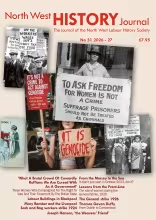
‘What A Brutal Crowd Of Cowardly Ruffians We Are Cursed With As A Government!’ by David Hargreaves
Labour Buildings in Blackpool by Alan Fowler and Terry Wyke
Mary Bamber and the Liverpool Sack and Bag workers strike 1924 by James Rees
From the Mersey to the Sea: It didn’t just start in October 2023, did it? by Jeremy Hawthorn
Lessons from the Front-Line The role of women during the General Strike, 1926 by Janet Hughes
The General strike 1926 Thomas Gavan Duffy: From Dublin to Cumberland by David Hargreaves
Joseph Hanson, ‘the Weavers’ Friend’ by Eddie Little
Welcome to the latest edition of North West History. Our collection of articles covers a time period of two centuries, from 1808, when Joseph Hanson was found guilty and imprisoned for aiding and abetting the hand loom weavers of Manchester in a conspiracy to raise their wages to present day Liverpool, still marching for peace and justice in Palestine. And we have a trip to the seaside; Blackpool loved by the trade unions and the Labour Party.
Leonard Hall, socialist, advocate of women’s suffrage and close friend of the Pankhurst family was the subject of a biographical article in number 50 of this journal.The Hall family story continues in this edition with a glimpse into the activities of his wife, Patty and daughters, Nellie and Nora Emmeline. Why did they have coils, fuses and twenty-two bags filled with stones, flints, hammers in their Maida Vale flat, in May 1914?
At the time, the authorities and newspapers used the word ‘terrorism’ to describe the sustained and highly organised campaign of arson and bomb attacks carried out by the Suffragettes in the period prior to the first world war. The homes of ministers, sports facilities, theatres, churches, the railway network, the postal service were targeted; four people were killed, others, including postal workers and train guards were injured. The women were subjected to inhumane treatment whilst in prison. Emmeline Pankhurst spoke of waging ‘destructive, guerrilla warfare against the government’ designed to make ‘every department of English life insecure and unsafe’. Today, the Suffragettes are lauded as heroines and role models by Members of Parliament and the judiciary.
The women active during the General Strike and the miners’ lock out of 1926 were still waiting for universal suffrage but many of them saw it as part of the struggle for socialism and justice for working class men and women. Surely, that was why Mary Bamber dedicated her life to organising and empowering some of the most exploited members of society.
History is a matter of interpretation. All too often, the powerful in society control the story told. Our aim in the North West Labour History Society has always been to give the less known a voice and these are sometimes awkward, sometimes inconvenient. Liam Mellows, born in Ashton-under-Lyne, dedicated himself to the struggle for Irish independence from Britain, only to find his views unacceptable to the victors of the bitter Irish Civil War. Liam was the subject of a new talk which was presented by members of the society at Tameside Local Studies and Archives Centre in September. Please contact us if your group would be interested in hearing about Liam, Alice Foley, Bolton lass who became the first female General Secretary of a cotton industry trade union or James Connolly.
My thanks go to the people who contribute to the production of this journal; all members of the Editorial Board, Mike Carter for excellent design, authors, advertisers, subscribers and, of course, subscribers and readers.